Rosemary
Funerary herb of antiquity, plague-era fumigant, Shakespeare's emblem of memory — rosemary's pre-modern record is unusually well sourced, and separable from later craft additions.
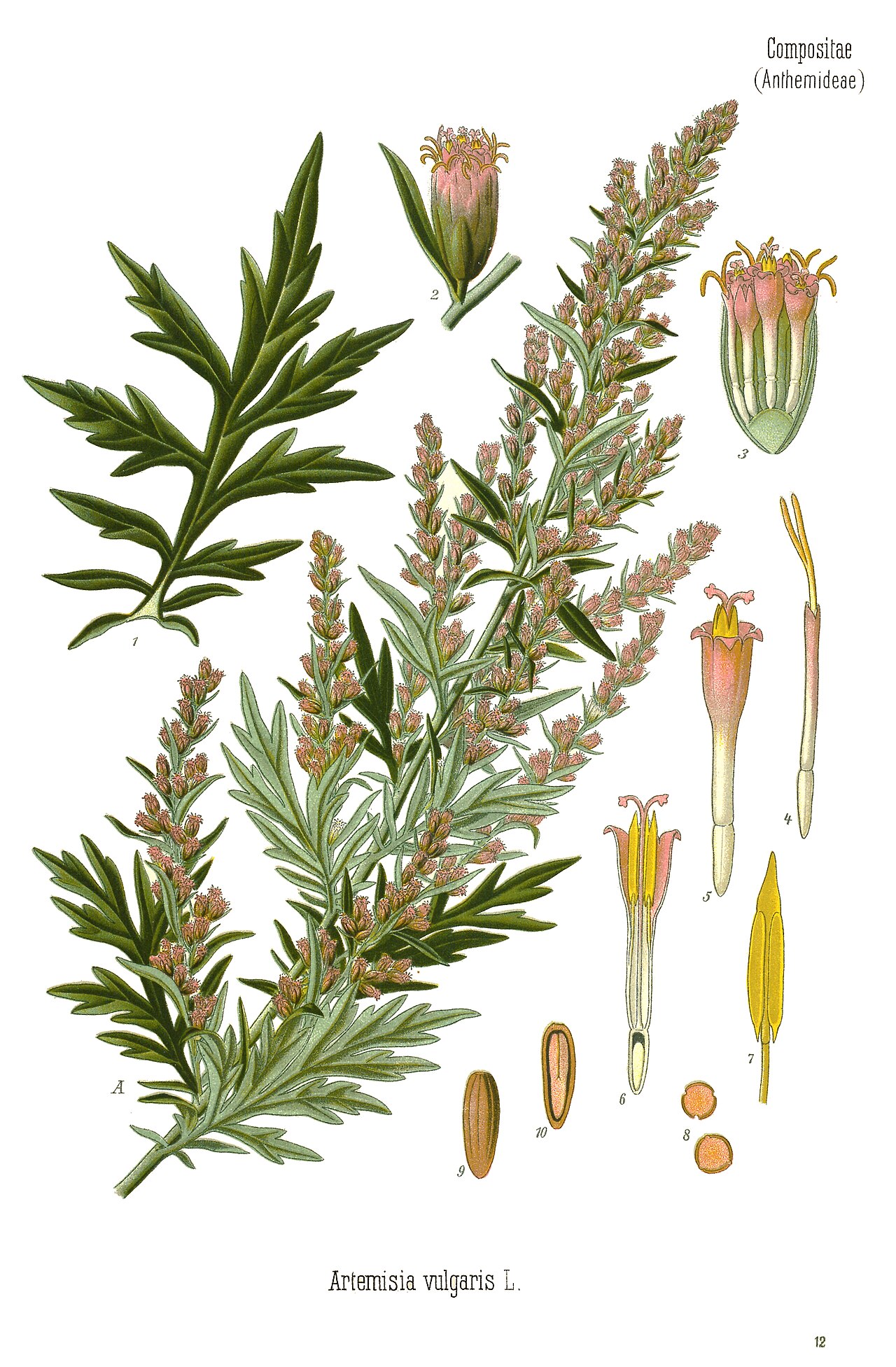
Rosemary (Salvia rosmarinus, formerly Rosmarinus officinalis) is one of the few craft herbs whose pre-modern biography is genuinely long, genuinely sourced, and genuinely interesting. Most of what you will read on witchcraft blogs is either Shakespeare quoted at you or a Cunningham correspondence table presented without context. Neither is the full story.
What follows is an attempt to lay the record out cleanly: what ancient and medieval sources actually say, where the plague-era protective tradition comes from, why “rosemary for remembrance” is older and better-attested than nearly any other craft-herb association, and what the twentieth century added.
The plant
Salvia rosmarinus is a woody-stemmed, narrow-leaved evergreen shrub native to the Mediterranean coast. The name derives from the Latin ros marinus — dew of the sea — a reference to its habit of thriving in thin coastal soils where little else grows. The leaves are needled and aromatic; the oil is dominated by 1,8-cineole, camphor, and borneol, which accounts for the sharp, resinous character of both the fresh plant and dried herb. It is closely related to sage (same genus since the 2012 reclassification), which explains some overlap in fumigation and purification uses across traditions.
The plant has been cultivated in the Mediterranean basin for at least three thousand years. Sprigs have been recovered from Egyptian burial contexts; in ancient Greece and Rome it was associated with memory and purification, often burned as incense, and thought to banish diseases and evil spirits.
The ancient record
Physician Pedanius Dioscorides included rosemary in his most famous work, De Materia Medica, a first-century Greek encyclopedia on herbal medicine. According to him, rosemary “is warming and cures jaundice…It is also mixed with remedies for the removal of fatigue.” This is the earliest precise botanical description of the plant in the Western record, and it is already an established materia medica entry, not a new observation.
Pliny the Elder, writing around the same period, took a different angle. Pliny and other authors remark that rosemary and its roots bear a fragrance very similar to frankincense, so much so that they are called by the same name in Greek, libanotis. The identification with frankincense is significant: it partly explains why rosemary was accepted as a fumigation substitute in domestic and religious contexts where imported resins were expensive or unavailable. A Mediterranean peasant who could not afford frankincense could cut rosemary from the hillside and achieve something functionally similar in the ritual economy.
In ancient Greece and Rome, rosemary had a strong association with memory, with a presence in marriages and funeral rituals alike. These two uses — the wedding and the grave — are not contradictory. Both are about permanence, about asking the living to carry the present moment forward. The herb works the same symbolic register in both directions.
Students in Greece reportedly wore crowns of rosemary during examinations. The detail appears in multiple secondary sources and echoes Dioscorides’ note about fatigue — a plant that removes weariness and sharpens cognition would naturally attract an examination-day association. Whether the practice was widespread or anecdotal cannot now be settled, but the cognitive claim is consistent across sources spanning several centuries.
”Rosemary for remembrance”
The single most famous line attached to this herb is Ophelia’s in Hamlet (c. 1600): “There’s rosemary, that’s for remembrance. Pray you, love, remember.” This is usually cited as the origin of the association. It isn’t. Shakespeare is recording a commonplace, not inventing one.
In sixteenth-century herbals, rosemary’s connection to memory was well established — William Turner’s herbal of 1568 already treats its properties as known. The dramatist reaches for rosemary because the audience will immediately understand the reference. Shakespeare also brings rosemary into the worlds of Romeo and Juliet and The Winter’s Tale. In the former, he embraces the herb’s funerary significance: after finding Juliet’s body in a deathlike trance, the friar tells her loved ones, “Dry up your tears, and stick your rosemary / On this fair [corpse].”
The funerary use is the older of the two strands. Placing rosemary in the hands of the dead, or carrying it at funerals as both symbol and mild preservative fumigant, runs from antiquity through the early modern period without a significant break. During the Middle Ages, rosemary was widely used in Europe to ward off illness and often burned in homes and hospitals for purification. The funeral and the sickroom occupy the same aromatic logic: a strongly scented herb that the ancients had associated with both memory and the warding-off of pestilence is naturally deployed at the threshold between the living and the dead.
In 1607, the English Doctor of Divinity Roger Hacket put the cognitive and memorial threads together neatly: “Speaking of the powers of rosemary, it overtoppeth all the flowers in the garden, boasting man’s rule. It helpeth the brain, strengtheneth the memorie, and is very medicinable for the head.” This is not craft writing; it is the standard educated consensus of the period.
Plague and the fumigant tradition
The most dramatically documented period in rosemary’s European history is the plague era. The price of rosemary skyrocketed in London in the early 1600s after the plague claimed thousands of lives because rosemary was thought to prevent the disease. Contemporary accounts record the price rising from roughly one shilling for an armful of branches to six shillings for a handful by the end of 1603 — a roughly twelve-fold increase driven by panic demand.
The protective logic had a practical basis the practitioners did not know they were operating. Burning aromatic herbs does discourage the insects that carry fleas, and fleas carry Yersinia pestis. Rosemary’s antimicrobial and insect-repellent properties are real, if modest; the people who burned it in sickrooms were not entirely wrong, just wrong about the mechanism.
Culpeper, in his Pharmacopoeia Londoniensis (1652/1653), called rosemary water “an admirable cure-all remedy of all kinds of cold, loss of memory, headache, coma,” adding that it “receives and preserves natural heat, restores body function and capabilities, even at late age.” Culpeper’s text is the major bridge between the learned herbal tradition and popular domestic practice; his recommendation of rosemary for cognitive and warming purposes codified what had been practical knowledge for centuries.
Rosemary also appears as a component in the vinegar of the four thieves — the legendary plague-preventive vinegar that included rosemary alongside rue, lavender, garlic, and distilled vinegar. The recipe’s historical authenticity is debatable but its existence reflects the plant’s established reputation as a purifier and ward against contagion.
Wedding and fidelity uses
The funerary and wedding appearances are worth treating together because they share an origin in the same symbolic logic. In both ancient Greece and Rome, rosemary was worn by couples at weddings and placed in the hands of the dead. Both gestures invoke endurance — of memory, of love, of the person carried forward by those who survive them.
The medieval European wedding tradition is well-attested: brides wove rosemary into their headdresses, guests received gilded sprigs as gifts, and the couple might plant rosemary in the wedding-day garden as an omen of the household’s future. The plant’s vigor — it roots easily, grows in poor soil, tolerates drought — made it a practical as well as symbolic choice for a founding-day planting.
The modern correspondence layer
From the seventeenth century onward, the documentary trail for rosemary-as-herb becomes increasingly medical and decreasingly ritual. Maud Grieve’s A Modern Herbal (1931) records the older customs as history but writes primarily from a botanical and pharmacological standpoint. The explicit magical correspondence assignments — element, planet, gender, sabbat — are a twentieth-century construction.
Cunningham’s Encyclopedia of Magical Herbs (1985) is a foundational text in modern witchcraft detailing rosemary’s elemental, planetary, and magical associations. In that system, rosemary is assigned to the Sun, the element of Fire, and masculine polarity, with powers covering protection, love, lust, mental powers, exorcism, purification, healing, and sleep. It also carries the note that rosemary “may be substituted for any other herb” — a practical acknowledgment of its versatility that has since hardened into a piece of received craft wisdom.
The Sun/Fire placement is a reasonable extrapolation from the herb’s Mediterranean origin, its warming qualities as described by Dioscorides and Pliny, and its visual character (spiky, resinous, drought-resistant). It is not, however, a classical or medieval assignment. In earlier European systems, rosemary is an herb of memory and purification, categories that do not map neatly onto the four-element / seven-planet grid that the modern craft inherited from ceremonial magic via the nineteenth century.
Once the solar correspondence is established, the attributions of Leo and Fire are applied by extension — rosemary does have the boldness of Leo and flame-shaped bushes, but its traditional uses lean more toward cleansing, healing, and clarity than to courage, protection, or aggression.
None of this makes the modern assignments wrong as a working system. It makes them modern, with a specific intellectual genealogy that can be traced. A practitioner who uses rosemary as a solar herb is working in a tradition that is roughly seventy years old, drawing on a classical description of warming properties that is roughly two thousand years old. Both are real. Knowing the difference is the point.
Correspondences (in modern practice)
For reference only — the assignments below reflect twentieth-century practitioner sources, not pre-modern folklore:
- Element: Fire (Cunningham; the majority modern position)
- Planet: Sun (Cunningham) — occasionally also Mercury or Moon in eclectic sources
- Gender: masculine
- Sabbat: Yule (evergreen decoration) and Litha (solar association)
- Powers: protection, purification, mental clarity, memory, love, healing
The most historically grounded of these is memory, which runs from Dioscorides through Shakespeare to Culpeper without interruption. The rest are modern construction on a classical foundation.
Safety
Rosemary contains camphor and 1,8-cineole. It is contraindicated in pregnancy at medicinal doses — the herb’s tradition as an emmenagogue is documented in period sources including Turner (1568). Large internal doses may cause seizures in sensitive individuals. Topical and incense use is generally well-tolerated; culinary amounts present no concern for most adults. Allergy is possible in those sensitive to other Lamiaceae.
This is not medical advice. It is the standard set of cautions the herbal record itself carries.
Working with the record
Rosemary is unusual among craft herbs in that its pre-modern history does not require invention or over-reading. The funerary use is documented from antiquity. The wedding use runs in parallel from the same period. The protective fumigation is recorded in plague-era sources and costs. The memory association appears in Dioscorides, recurs across several centuries of European herbalism, and reaches Hamlet as an already-established cultural commonplace.
What the twentieth century added is a specific elemental and planetary framework for that history. If those frameworks suit your practice, the underlying plant has the credentials to carry them. If they don’t, the older record — memorial herb, threshold herb, herb of the living and the dead — stands entirely on its own.
Cross-references on this site: (forthcoming — Litha sabbat page, purification ritual, Hamlet’s herbs, plague-era folk medicine.)
Sources
- 1 Pedanius Dioscorides , De Materia Medica (c. 65 CE) First-century Greek encyclopedia of herbal medicine; describes rosemary's warming properties and medical applications. Standard modern edition: Osbaldeston & Wood, 2000.
- 2 Pliny the Elder , Naturalis Historia (c. 77 CE) Books XII–XXVI cover plants; rosemary described, likened to frankincense ('libanotis'), and recommended for multiple ailments.
- 3 John Gerard , Herball, or Generall Historie of Plantes (1597) Standard English herbal of the period; rosemary treated for medicinal and symbolic properties. Revised and expanded edition by Thomas Johnson, 1636.
- 4 Nicholas Culpeper , Pharmacopoeia Londoniensis / Complete Herbal (1653) Praises rosemary water as remedy for loss of memory, headache, and cold. Widely reprinted and influential in popular herbalism.
- 5 Maud Grieve , A Modern Herbal (1931) Comprehensive survey of European herbal tradition; documents funerary, wedding, and protective rosemary customs with sources.
- 6 Scott Cunningham , Cunningham's Encyclopedia of Magical Herbs (1985) Source for the modern Wiccan correspondence assignments: Sun, Fire, masculine. Useful as a record of mid-20th-century attributions, not as folklore evidence.
- 7 William Shakespeare , Hamlet (c. 1600) Act IV, Scene V: Ophelia's 'There's rosemary, that's for remembrance' is the most-quoted literary attestation of a tradition already centuries old by 1600.